Frekvence terapie: Kolikrát týdně je skutečně potřeba jít na sezení?
When you start therapy, one of the first questions you ask yourself is: frekvence terapie, how often you should attend therapy sessions to make real progress. There’s no universal answer, but there are clear patterns based on what actually works for people. Most therapists in the Czech Republic recommend starting with jedno sezení týdně, a weekly session that provides consistent support and builds momentum in the therapeutic process. That’s the sweet spot for most people dealing with anxiety, depression, or relationship issues. It’s enough to keep the work alive between sessions, but not so much that it feels overwhelming.
But why weekly? Because therapy isn’t a quick fix—it’s a process that needs time to sink in. Your brain needs space to process what you’ve talked about, to notice patterns in your thoughts or behaviors, and to try out new ways of reacting. If you come only once a month, you risk losing momentum. You might even start forgetting what you worked on last time. On the other hand, coming twice a week isn’t always better. For most people, it’s too much—expensive, emotionally draining, and sometimes even counterproductive. The goal isn’t to fill your calendar, but to create real change.
There are exceptions, of course. If you’re in crisis—having panic attacks every day, feeling suicidal, or dealing with recent trauma—intenzivní terapie, a more frequent therapeutic approach, often daily or several times a week, used during acute psychological crises. might be necessary. Some people start with two sessions a week for a few weeks, then taper down. Others, especially those working through long-term trauma or personality issues like BPD, may need ongoing weekly sessions for months or even years. But even then, it’s not about frequency alone—it’s about terapeutický proces, the structured, evolving journey of healing and self-understanding through professional psychological support. What matters is whether each session moves you forward.
And what about people who just want to check in? Maybe you’re not in crisis, but you feel stuck. One session a month can be enough for maintenance—like a car service. You’re not fixing a broken part, just keeping things running smoothly. But even then, you should have a clear goal: Is it to manage stress? To stay on track with boundaries? To avoid slipping back into old patterns? Without a goal, monthly sessions can become expensive chat sessions.
The truth is, no therapist will tell you outright: "You’re coming too often" or "You’re coming too rarely." They’ll nod, take your money, and hope you figure it out. But you deserve better. Ask yourself: Do I feel clearer after each session? Am I noticing changes in my daily life? Do I feel like I’m making progress, or just talking in circles? If the answer is no, it’s not about frequency—it’s about fit. Maybe you need a different approach, a different therapist, or a different rhythm.
In the Czech Republic, many people assume therapy means weekly sessions forever. But that’s a myth. Some people find what they need in 10 sessions. Others need two years. The key isn’t how often you come—it’s whether you’re using each session to build something real. The posts below will show you how others have navigated this—when weekly sessions helped, when monthly was enough, and when skipping weeks actually made things worse. You’ll see real stories, not theory. And you’ll walk away knowing exactly what rhythm works for your life—not someone else’s.
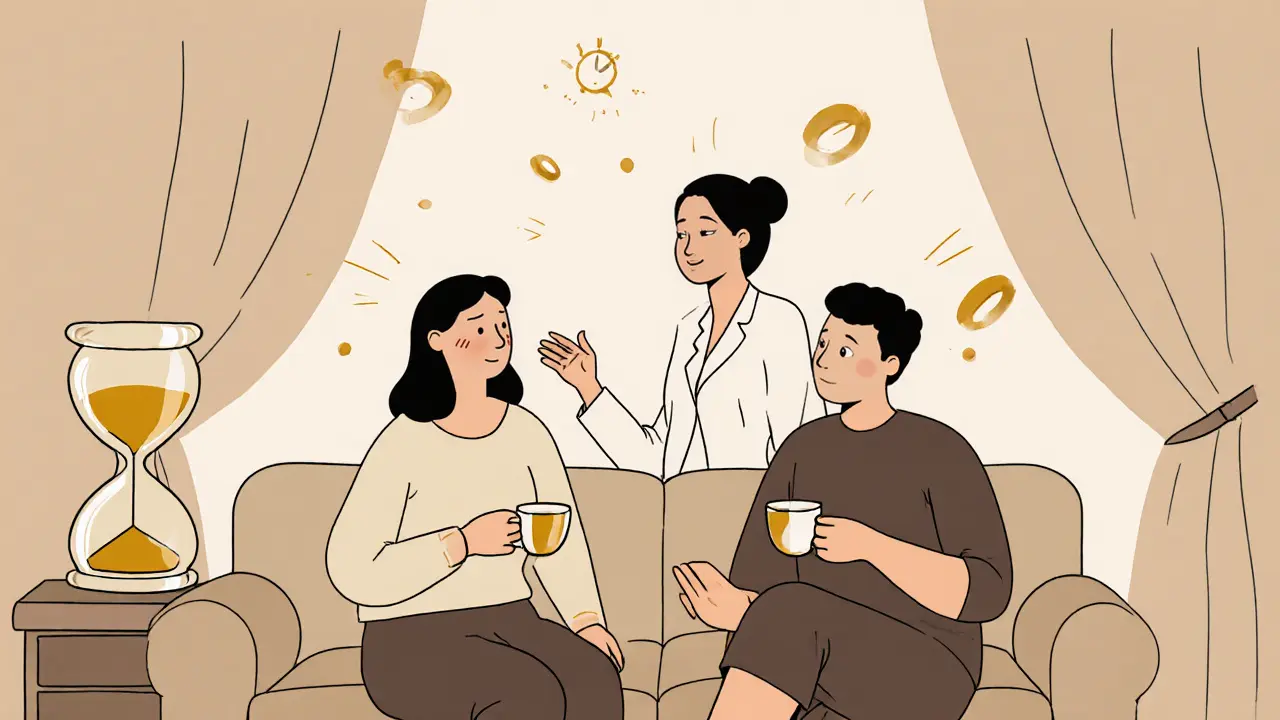
Délka a frekvence párové terapie: Proč 90 minut dává smysl
- Od : Molly Mortimer
- Datum : lis 24 2025
Párová terapie trvá 90 minut, protože dva lidé potřebují čas, aby se slyšeli. Frekvence jednou za 3-4 týdny umožňuje nové dovednosti zkusit v reálném životě. Účinnost je dokázána - a úspěch neznamená jen záchranu vztahu.